The Tower Negative
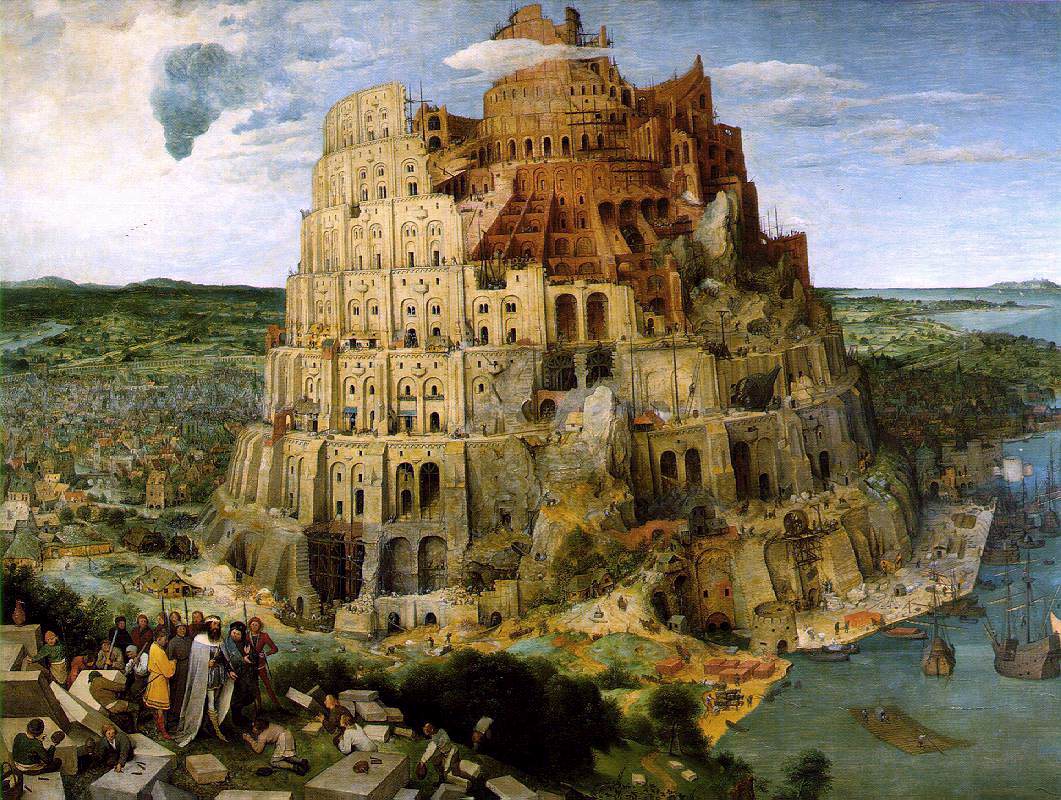
Tower of Babel - artist's impression. THIS tower in particular marked the beginnings of a series of negative connotations still attributed to towers today - for it was built as a hubristic act of defiance against God - by Nimrod the tyrant, the arrogant, the proud.
At present, towers or skyscrapers are often interpreted as being symbolic of the EGO - man's 'power' or simply put - the penis erect. Who will or can build the tallest tower? It has evolved into a race to demonstrate who has the most wealth - a means to show off one man's or nations' wealth against another.
Skyscrapers still stand today as a symbol of pride/achievement and this is probably one of the reasons that the WTC Twin Towers were chosen as suitable targets for the 9-11 attacks. They were symbolic - and so had to be the attacks to get the terrorists' message across.
The Tower Positive
Examples of where towers have been associated with positively include:
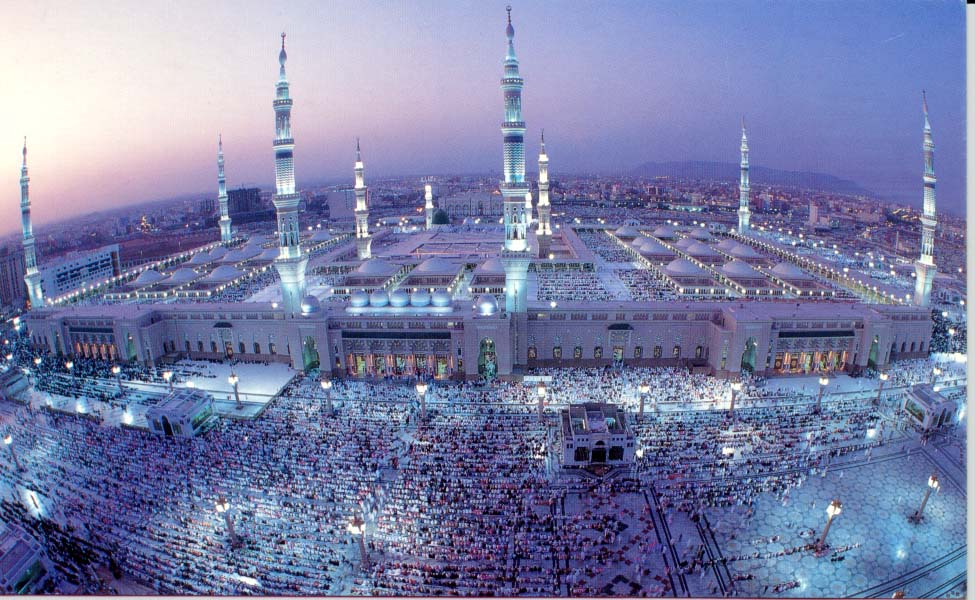
Religious architecture - the minaret and the steeple among others. (call to prayer vocal or using a bell/so it can be spotted from a distance and that the sound is diffracted/not hampered/muffled by the surroundings)
Defensive towers - forts, GW of China, les toures (Castles) etc.. (to spot friend from foe and be able to attack from up high - advantageous)

_________________________________________________________
The Catalysts?
Technological advancements and material manipulation, such as steel frame construction and the invention of the elevator contributed greatly to the now-possible increase in the 'building altitude' - helping us move away from stone masonry (Monadnock Bldg. & Philadelphia's City Hall) to a 'lighter' or higher [strength : weight] method of construction. The elevator in turn facilitated vertical circulation as walking up more than 5 flights of stairs was seen as impractical.
In addition, pumps and storage tanks also aid in maintaining water pressure atop skyscrapers - allowing us to build higher/taller and without running water disabilities.
_________________________________________________________
System Constrained
Some of the clear issues which regulate the building of skyscrapers include:
1. The height at which atmospheric pressures and temperatures become problematic for construction workers and machinery (cranes etc) or even materials to operate at efficiently e.g. glass for thermal insulation.
2. The wind pressures are beyond control/countering - coupled with seismic loads in certain regions.
3. Building codes and height restrictions within cities.
4. Economics - Material demand/supply/feasibility studies etc..
5. Cost of land in CBD - expensive.
6. Transportation Network & costs.
7. Location/Population - is it a necessity to build for a population that doesn't exist.
8. Historic site/Preservation.
9. Property setbacks and site footprint - building tall = wider base.
10. Time for construction/completion.
11. Energy Efficiency.
note: 1 & 2 fall into greater category of technological constraints.
___________________________________________________
At Present

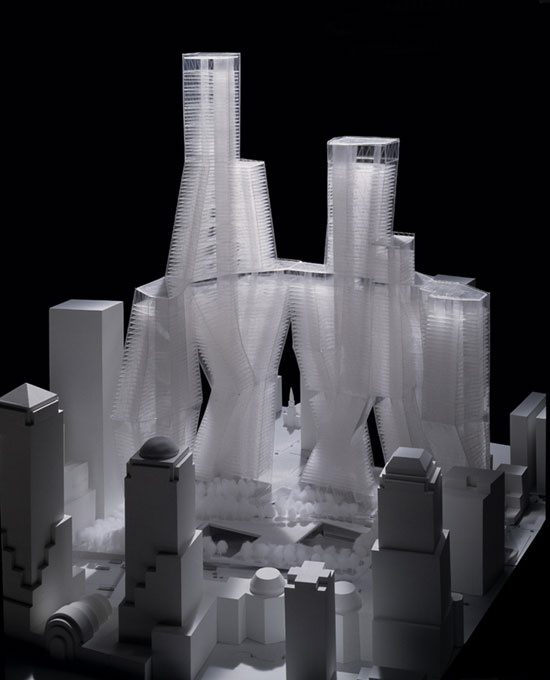


United Architects' WTC scheme (finalists 2002). Notice the 'street-scape' connecting all towers together shown in the section but also in the renderings + model. Of particular interest is the photomontages which are somewhat indicative of projected growth for the NY skyline.
_______________________________________________________
Gardens in the Air


Moshe-Safdie "gardens in the air" - resting atop a platform on the roofs of the 3 mini- 'skyscrapers' that act as structural supports (building = column).
_________________________________________________
The Future Tower Conceptualized?

Entry from Daekwon Park (Evolo skyscraper competition) - way to reunite isolated city blocks and insert a multi-layer network of public/green space & nodes for the city.

Stephen Holl - Horizontal Skyscraper proposal.
________________________________________________________
Remnants & Further Understanding
Looking specifically at studies of skyscraper - proposals and ideology. Utopian visions?
Urban Planning is key - looking at different sites to get an idea of density & other occurrences of interest.
In-depth Structural Innovation Timeline.
Organizational models & examples of strategy.

No comments:
Post a Comment