
Wednesday, December 3, 2008

Wednesday, November 5, 2008
Precendent + Precedence

Kurokawa, Kisho - founder of metabolists 1960s Jpn
"cities that adapted to an ever-increasing population by building flexible, 'extendable' structures that could be added to over time."
"symbiosis in architectural terms to kurokawa meant that buildings shouldn’t be viewed as mechanical structures in isolation of each other but should instead work together advantageously as living, breathing entities".

Isozaki, Arata- metabolist architect;
Clusters in the Air in 1960-62 for Tokyo;
uses the same joint core system as he did for the City in the Air - see image below.

Other architects + city planners that are involved with this movement are Akri Shibuya, Youji Watanabe, Kenzo Tango, Kisho Kikutake, Takashi Asada, Noboru Kawazoe, Kiyonori Kikutake, Fumihiko Maki, Masato Otaka, Peter Cook, Ron Herron, Justus Dahinden Walter Jonas, Moshe Safdie and Gunther Domenig.
The following links are from a database of skyscrapers in the world today - with images of these;
http://skyscraperpage.com/diagrams/?searchID=40279594&offset=25
http://skyscraperpage.com/diagrams/?1178316.
For information of city block densities - I could use Urban Age website;
http://www.urban-age.net/10_cities/_data/data_UAC.html
Monday, October 27, 2008
([the]sis) (re-{vision})
the what: i am connecting towers - but thats not all. with this connectivity increased - i will have the opportunity to address living conditions + community spaces - but also connecting these back to the ground as well for sky and ground were meant to intermingle. this will help alleviate congestion at ground level and allow for better growth at levels above.
the why: skyscrapers = boring. they stand all alone. asocial + immobile. segregated from the rest of the city - tower design is an exercise in form making with serious limitations! To architects - this is what will put us out of business - or make our work sterile, repetitive - and yet there are possibilities, solutions, opportunities to clean up this mess we've actually created for ourselves over the years. in order for there to be efficient growth, transportation reduction etc...we need to build around these 'cores' or columns - just as columns in the past defined space so it should be that from these skyscrapers arises a new potential to promote connectivity, circulation, social activity and for these new architecture types to serve as a platform for future growth and development.
the how: i need to learn from other peoples theories/projects/mistakes and successes - Hyatt Regency, FLW + Le Corbusier's housing schemes. Though I believe I am doing something a little different than all of these - but they are the contexts within which skyscrapers have been built. I think my thesis actually follows on from the japanese 'metabolists' -namely tange, isozaki, kikutake. So rather than Corbu's "Streets in the Air" - its more on the scale of Cities or Clusters in the Air.
the why (again): because i can? (that was a joke ppl) skyscrapers = inevitable. but inevitable # doom/damnation. for land costs may soar but there is a way to do it right vs. not at all! Architecture or Revolution? I say both. there is a need for a new model - not a continuation of one that stagnates - but a new building type - building around not atop a type that envelops other building envelopes - feeds off of them whilst nurturing them - maintaining a balance - achieving symbiosis.
Sunday, October 12, 2008
ThisisThesis
A. What am I going to do?
I will be advocating and designing for a different type of tower - one that s p a n s the skies - connecting the many towers that currently stand alone to one another and to the rest of the city.
B. Why am I doing it?/what question am I trying to answer?
1. Can cities be contained/maintained and improved to prevent other cities from growing elsewhere?
2, Can a new building typology (that I hope to argue for in my thesis) intersect/interact with the city in such a way that it improves its connectivity, helps it to expand without need for more land, in addition to reducing traffic + congestion at street level?
1. Can cities be contained/maintained and improved to prevent other cities from growing elsewhere?
2, Can a new building typology (that I hope to argue for in my thesis) intersect/interact with the city in such a way that it improves its connectivity, helps it to expand without need for more land, in addition to reducing traffic + congestion at street level?
C. How am I going to do it?/what am I going to learn about? (Methods)
My intentions are to further my understanding of Skyscrapers in their varying contexts. In gathering all relevant information (ranging from historical instances, to the pros and cons of tower design, to innovations and trends of this building typology) I hope to help support and inform my thesis (design) intervention. To do this, I will probably need to create a 'Universal Timeline' as reference to historical occurrences and innovations in tower design.
There are many books (among other documentation) on skyscraper/tower design and construction. The structural element will play a major role in the designing of a new type of tower that possibly spans rather than stands so having access to books on structural innovations will be key, in addition to a member of my readers being from the Building Technology Department. Also of importance, will be the understanding of building codes and setbacks/property rights, city planning and infrastructures and air rights. I could also be specific to a site – however I think it best to create an imaginary/abstracted scenario based off of different conditions in different cities. In this way I will learn about and be able to present different solutions/condition responses – demonstrating the adaptable nature of the building typology (in its many forms) that I will be advocating for in my thesis.
D. Why is it important?
Evidence has shown that with current trends in city growth, design and construction, many of these cities will most likely become completely unsustainable – eventually leading to collapse or turmoil promoting the rise of other cities elsewhere.
From another standpoint, cities are becoming increasingly congested and asocial – the sense of community that once existed is near invisible and it is believed that this is partially due to the rapid growth of cities and the building typology. Being stuck in a cubicle on the 49th floor of your typical skyscraper isn’t a very interactive experience, particularly when you take the elevator back down, take the metro and get into bed only to repeat this the next day. Proximity and therefore connectivity are key to rejuvenating these city centers.
Lastly, with the demand for land on the rise and its availability depleting, we are left posing the question of where can/should we build next? Reclamation isn’t a viable or ideal solution any more! Nor is the cutting down of rainforests, or building on virgin lands. We need to turn to the skies – but with a different attitude; not piercing it but floating in it.
Wednesday, October 8, 2008
Towers: A Rooted Evolution
The Tower Negative
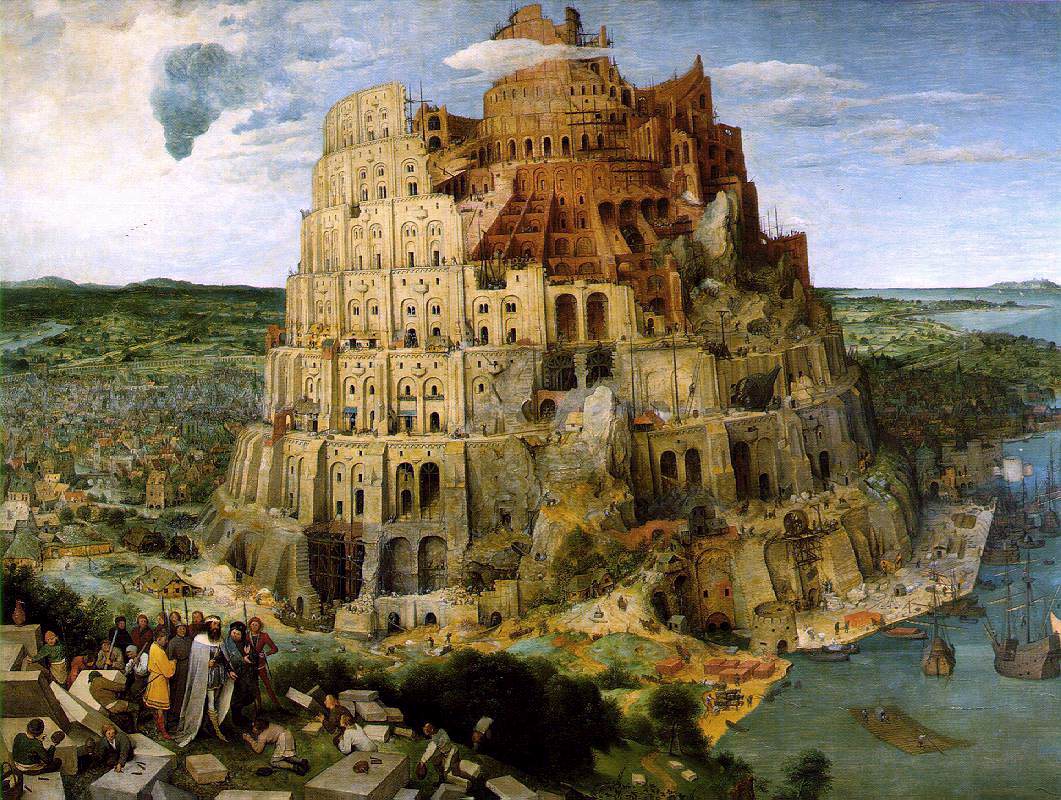
Tower of Babel - artist's impression. THIS tower in particular marked the beginnings of a series of negative connotations still attributed to towers today - for it was built as a hubristic act of defiance against God - by Nimrod the tyrant, the arrogant, the proud.
At present, towers or skyscrapers are often interpreted as being symbolic of the EGO - man's 'power' or simply put - the penis erect. Who will or can build the tallest tower? It has evolved into a race to demonstrate who has the most wealth - a means to show off one man's or nations' wealth against another.
Skyscrapers still stand today as a symbol of pride/achievement and this is probably one of the reasons that the WTC Twin Towers were chosen as suitable targets for the 9-11 attacks. They were symbolic - and so had to be the attacks to get the terrorists' message across.
The Tower Positive
Examples of where towers have been associated with positively include:
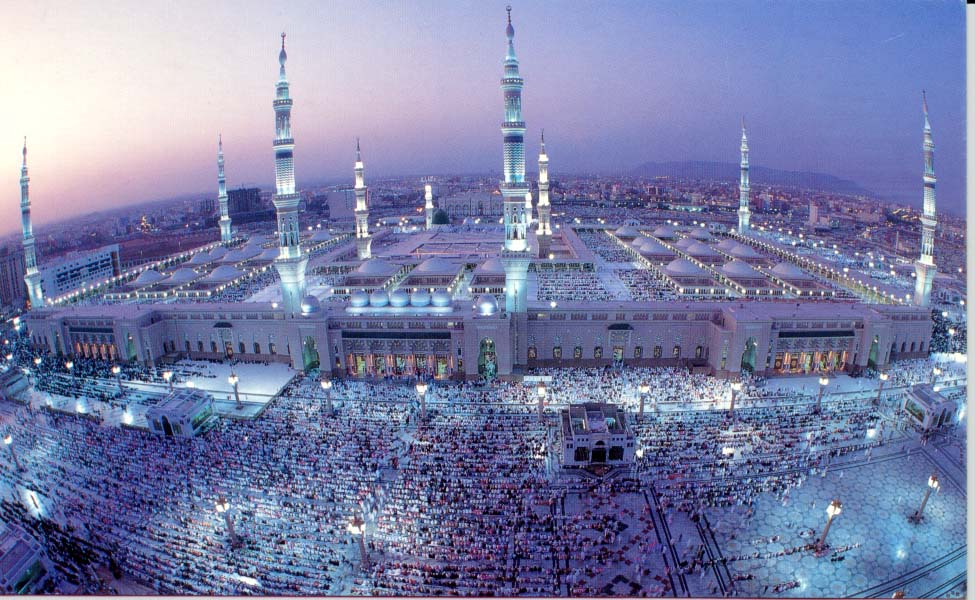
Religious architecture - the minaret and the steeple among others. (call to prayer vocal or using a bell/so it can be spotted from a distance and that the sound is diffracted/not hampered/muffled by the surroundings)
Defensive towers - forts, GW of China, les toures (Castles) etc.. (to spot friend from foe and be able to attack from up high - advantageous)

_________________________________________________________
The Catalysts?
Technological advancements and material manipulation, such as steel frame construction and the invention of the elevator contributed greatly to the now-possible increase in the 'building altitude' - helping us move away from stone masonry (Monadnock Bldg. & Philadelphia's City Hall) to a 'lighter' or higher [strength : weight] method of construction. The elevator in turn facilitated vertical circulation as walking up more than 5 flights of stairs was seen as impractical.
In addition, pumps and storage tanks also aid in maintaining water pressure atop skyscrapers - allowing us to build higher/taller and without running water disabilities.
_________________________________________________________
System Constrained
Some of the clear issues which regulate the building of skyscrapers include:
1. The height at which atmospheric pressures and temperatures become problematic for construction workers and machinery (cranes etc) or even materials to operate at efficiently e.g. glass for thermal insulation.
2. The wind pressures are beyond control/countering - coupled with seismic loads in certain regions.
3. Building codes and height restrictions within cities.
4. Economics - Material demand/supply/feasibility studies etc..
5. Cost of land in CBD - expensive.
6. Transportation Network & costs.
7. Location/Population - is it a necessity to build for a population that doesn't exist.
8. Historic site/Preservation.
9. Property setbacks and site footprint - building tall = wider base.
10. Time for construction/completion.
11. Energy Efficiency.
note: 1 & 2 fall into greater category of technological constraints.
___________________________________________________
At Present

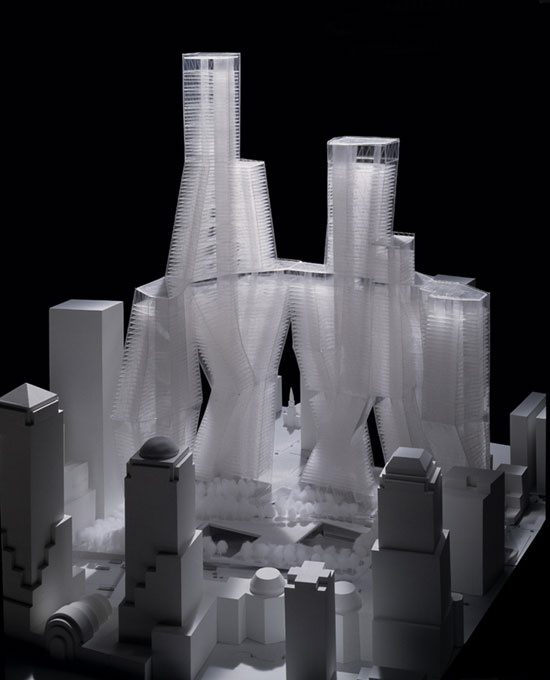


United Architects' WTC scheme (finalists 2002). Notice the 'street-scape' connecting all towers together shown in the section but also in the renderings + model. Of particular interest is the photomontages which are somewhat indicative of projected growth for the NY skyline.
_______________________________________________________
Gardens in the Air


Moshe-Safdie "gardens in the air" - resting atop a platform on the roofs of the 3 mini- 'skyscrapers' that act as structural supports (building = column).
_________________________________________________
The Future Tower Conceptualized?

Entry from Daekwon Park (Evolo skyscraper competition) - way to reunite isolated city blocks and insert a multi-layer network of public/green space & nodes for the city.

Stephen Holl - Horizontal Skyscraper proposal.
________________________________________________________
Remnants & Further Understanding
Looking specifically at studies of skyscraper - proposals and ideology. Utopian visions?
Urban Planning is key - looking at different sites to get an idea of density & other occurrences of interest.
In-depth Structural Innovation Timeline.
Organizational models & examples of strategy.
Thursday, September 18, 2008
Questions to ask myself

So, I think I'm going to try and stick to the city in the sky theme/topic...and see where it takes me. Here are a few questions I think need answering/further research:
1. how did towers come to be? (historically - babel till present)
2. why were towers built the way they were? (shape/character etc..)
3. what is the value of open space/recreational space?
4. what were some of the architects of the modern age's visions?
5. what are the proportions like - based on method of construction/landownership etc..?
In asking these I should probably come across more information which will eventually lead me to more questions...and so the cycle begins..
Monday, September 15, 2008
Thesis: Topics + Ideas

___________________________________________
1. Title: Spiritual Architecture in a Secular World: the Power of Space and its
Capacity for Inspiration.
Question: How can 'spiritual architecture' be better integrated into the 'secular city'?
Reason for Interest: As someone who considers themselves spiritual to some degree, I find myself troubled by the lack of spaces that captivate and help promote spirituality in the fast paced hustle and bustle of the World at present. Human beings are not machines and it is my belief that the spaces we inhabit should reflect that - and that there should be an integration of this 'spiritual architecture' into the city to provide man with a means of release and refuge from the monotony of life.
1. Title: Spiritual Architecture in a Secular World: the Power of Space and its
Capacity for Inspiration.
Question: How can 'spiritual architecture' be better integrated into the 'secular city'?
Reason for Interest: As someone who considers themselves spiritual to some degree, I find myself troubled by the lack of spaces that captivate and help promote spirituality in the fast paced hustle and bustle of the World at present. Human beings are not machines and it is my belief that the spaces we inhabit should reflect that - and that there should be an integration of this 'spiritual architecture' into the city to provide man with a means of release and refuge from the monotony of life.
_______________________________________________
6. Civitas Celestialis (City in the Sky): Urban Containment
Question: What would the effect of building around the already existing architecture of a city have on its development and containment?
Reason for Interest: We seem to be going in one direction when it comes to building and that direction is up. However the lone 'towers' or skyscrapers of the 20th and 21st centuries are if anything distant from the remainder of the buildings in their vicinities. The purpose of this thesis would be to develop a city into something more integrated in comparison to its former self-facilitating movement from earth to sky and building to building. For as demolishing buildings can become too expensive and land scarce - we need to use technology and our capacity to build 'up' to our advantage to prevent urban sprawl and successfully contain these cities further developing them than directing our attention elsewhere. The City in the Sky is something I would like to explore as a means of urban containment. This would of course need to be specific to a particular city with an already abnormally high population and urban density.
___________________________________________

Subscribe to:
Posts (Atom)